
Episode 1: Backup Power with ADVENT Technologies
We are kicking off the series with the first interview by ADVENT Technologies, the technology provider of the dual fuel HT-PEM fuel cell technology for the RESCUE project.
In this interview, ADVENT Technologies shares insights into its role within the RESCUE project and explains how HT-PEM fuel cell technology could redefine resilient and sustainable backup power for critical infrastructure.
Could you please introduce your company and briefly describe your role in the RESCUE project?
ADVENT Technologies is an innovation company specializing in High-Temperature Proton Exchange Membrane (HT-PEM) fuel cell technology. The company provides energy solutions designed to operate in the most demanding environments.
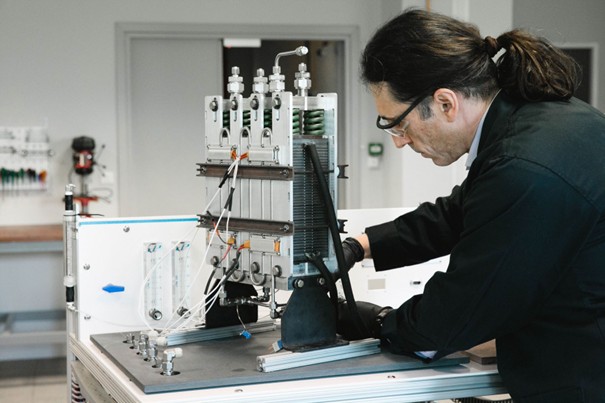
Within the RESCUE project, ADVENT acts as the lead technology provider and system integrator. The company’s responsibilities encompass the end-to-end engineering and development of both the fuel cell units and the fuel storage containers. Beyond hardware development, ADVENT provides the technical guidance and feedback necessary for consortium partners to execute vital work packages, including certification, performance testing, and system simulations. Ultimately, ADVENT serves as the bridge that translates the dual-fuel concept into a field-ready, containerized power solution.
When the grid fails in a disaster, seconds matter. How does your dual-fuel HT-PEM system ensure immediate and stable power in that critical moment?
In a disaster scenario, response time is dictated by both logistical agility and technical readiness. We address this through a „deploy-first“ engineering strategy:
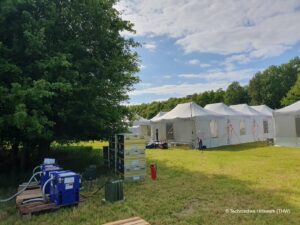
Logistical Readiness: The decision to use a standard 20-foot container ensures our fuel cell system can be loaded onto any standard truck and dispatched instantly, bypassing the delays associated with oversized transport. Once on-site, the system functions as a fully stand-alone power source for up to 24 hours. This built-in autonomy is critical for disaster response; it provides immediate, stable energy using internal fuel, giving the logistics team a 24-hour window to deliver the secondary 10-foot fuel container while ensuring uninterrupted power flow.
Instantaneous Transition: On a technical level, the system provides an instantaneous load transfer upon grid failure. An integrated battery bank serves as a high-response buffer, bridging the gap until the HT-PEM units reach full operational output. Once grid power is restored, the system can transition into a ‚hot standby‘ mode to ensure readiness for subsequent interruptions. The dual-fuel architecture fueled by either methanol or hydrogen guarantees a stable power supply, maintaining performance regardless of extreme environmental conditions or the immediate availability of external hydrogen.
From an engineering perspective, what makes dual-fuel operation with hydrogen and methanol particularly robust compared to conventional backup solutions?
The primary engineering advantages are described below:
Fuel Flexibility & Reliability: Conventional diesel generators rely on fuel that can degrade over time and require high maintenance. Diesel fuel typically lasts only 6–12 months before degrading, requiring additives or „polishing“ to maintain quality. Unlike diesel, methanol does not break down or form sediments over time, making it excellent for long-term storage, especially for standby power systems, provided the storage tanks are properly sealed against moisture. Additionally, the ability to operate on either 100% hydrogen or methanol ensures continuous operation and reduces dependence on a single fuel like diesel. Hydrogen enables zero emission performance, while methanol offers a stable, easily stored and transportable fallback. This dual fuel approach improves reliability, simplifies logistics, and enhances adaptability under varying conditions, supporting broader deployment in the hydrogen economy.
Spatial Efficiency: By integrating an internal mixing system to recycle water produced at the cathode, we decrease the required liquid fuel storage volume by approximately 40%. This allows us to pack more „run-time“ into the same footprint.
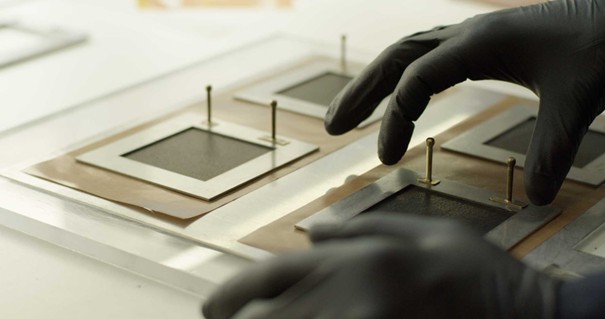
Mechanical Simplicity: While internal combustion engines (ICE) are physically robust, their reliance on complex mechanical assemblies—such as pistons, crankshafts, and valves—necessitates intensive maintenance, including frequent oil changes and injector cleanings. In contrast, fuel cell stacks generate power electrochemically, eliminating moving parts within the core energy-generation zone and avoiding the mechanical wear, noise, and vibration typical of ICE systems. This is particularly critical for backup applications; whereas diesel generators are prone to failure after long idle periods due to fuel degradation or starter issues, fuel cell systems are recognized for their superior startup reliability and long-term robustness.
Environmental Resilience: The RESCUE system is engineered to operate in extreme ambient conditions (from -30 to 50°C), making it far more robust for global disaster relief than standard backup systems that struggle in extreme cold or heat.
Looking ahead: how could your fuel cell technology influence future standards and expectations for resilient energy systems in critical infrastructure?
We are moving toward a new standard where „resilience“ must also mean „sustainability.“ For decades, critical infrastructure has been tied to the „dirty“ reliability of diesel. The RESCUE project proves that Green Resilience is possible.
Future standards will likely move toward modular, zero-emission containers that can be dropped into any environment. By demonstrating the operational performance of HT-PEM technology in real conditions, we are setting an expectation that backup power should be silent, carbon-neutral, and capable of running for weeks—not just hours. We believe this project will serve as the blueprint for how hospitals, data centers, and emergency services transition away from fossil fuels without compromising a single second of uptime.
Consortium
DLR Institut für Technische Thermodynamik, DLR Institut für Vernetzte Energiesysteme, Advent Technologies Holdings, Inc., Centre for Research & Technology Hellas (CERTH), Bundesanstalt Technisches Hilfswerk, DTU – Technical University of Denmark and ProAct.
Funding
Project RESCUE with Grant Agreement number 101192169. Supported by Clean Hydrogen Partnership and its members. Co-funded by the European Union.
Please Note