Advisory Board Workshop – Summary of Identified Application Scenarios
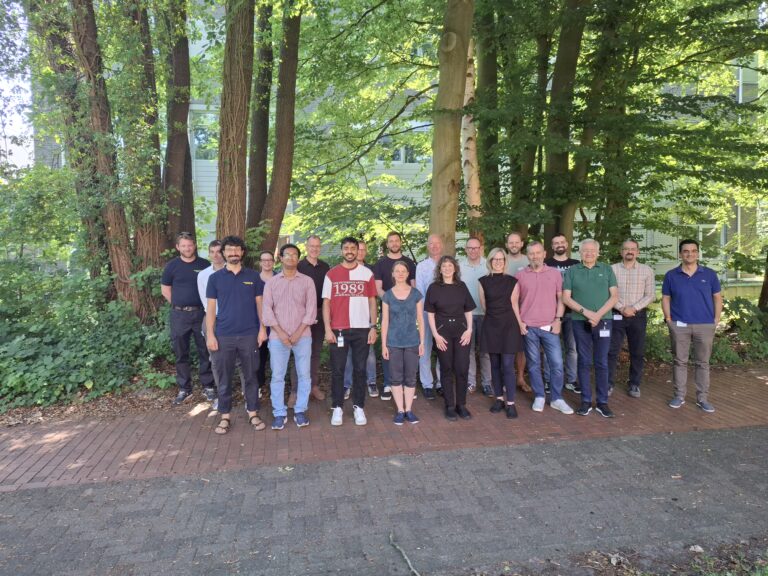
As part of the RESCUE Project Meeting at DLR in Oldenburg on 24 June 2026, RESCUE project partners and members of the Advisory Board (OOWV, ISAR Germany, JUH, IdF NRW, and BBK) came together for an engaging Advisory Board Workshop.
The workshop focused on discussing the identified application scenarios for the Dual-Fuel High Temperature PEM fuel cell system being developed within the RESCUE project, which is designed to operate on either hydrogen or methanol. The exchange provided valuable insights into potential use cases and practical requirements for the system in real-world emergency and resilience applications.
OOWV (Water Utility Association)
OOWV identified wastewater treatment as the most relevant application areas for the RESCUE system within their asset portfolio. Required power levels vary considerably depending on the facility, ranging from approximately 50 kW to well above 100 kW. OOWV emphasized that many utilities are currently investing in backup power solutions to improve resilience against power outages. However, they highlighted that emergency power concepts must be considered from a system-wide perspective, as supplying power to a single treatment plant may provide limited benefit if downstream pumping stations or other critical assets remain without power. Consequently, backup power planning should address the entire water infrastructure chain rather than individual facilities alone and should take mobile and flexible solutions into account.
ISAR Germany
ISAR Germany presented the requirements of deployable medical facilities used in humanitarian and disaster-response missions. Their current deployments typically rely on multiple small inverter-based generators operating in parallel. Typical power demand for a mobile medical facility is approximately 15–20 kW continuous load, excluding heating requirements. Existing field hospital concepts often use several generators in the 3–10 kW class to provide redundancy and operational flexibility. During the discussion, a larger and more stationary field hospital scenario, including diagnostic equipment such as X-ray systems (power peaks up to 40kW for approx. 2 seconds) and specialized medical units, was identified as a potentially interesting demonstration case for RESCUE. ISAR Germany expressed interest in contributing to scenario development and participating in future testing activities.
Johanniter-Unfall-Hilfe (JUH)
Johanniter-Unfall-Hilfe identified temporary event infrastructure and large public gatherings as potential application areas. In particular, they highlighted the possibility of supporting medical services and operational facilities at festivals and major events, where reliable power supply is required for extended periods. Such applications could provide a realistic environment for evaluating operational aspects of the RESCUE system, including deployment, logistics, noise emissions, and continuous operation under varying load conditions. Further discussions are required to define a suitable test scenario and the associated power demand profile.
Institute of the Fire Service NRW (IdF NRW)
The Institute of the Fire Service NRW emphasized its role as a facilitator and network partner for future demonstrations. While not identifying a specific operational scenario of its own, IdF NRW highlighted its ability to support the organization of field tests and exercises by connecting the project consortium with fire services and other emergency-response organizations. This could provide valuable opportunities to integrate the RESCUE system into existing exercises and training events, allowing evaluation under realistic operational conditions without the need to create dedicated test environments from scratch. In earlier discussions a forest fire scenario was also discussed as a possibility for a joint field test.
Federal Office of Civil Protection and Disaster Assistance (BBK)
BBK presented several mid and large-scale emergency power applications, including the supply of temporary camps and support infrastructures serving up to several thousand people. While some scenarios exceed the intended power range of the current RESCUE demonstrator, BBK confirmed the general relevance of resilient and sustainable mobile power generation for future civil protection concepts. No immediately suitable demonstration scenarios for the RESCUE system were identified. Nevertheless, BBK expressed interest in following the project’s progress and evaluating potential applications of the technology within the context of civil protection and emergency preparedness.
Overall Workshop Outcome
The Advisory Board discussions confirmed that the most promising application areas for the RESCUE system are currently found in critical infrastructure support, particularly within the water sector, and in temporary field installations such as deployable medical facilities. In addition, the workshop identified valuable opportunities to integrate future demonstrations into existing exercises and training events through the networks of participating organizations. These findings will support the selection and development of representative field-test scenarios within WP7.