Episode 4: DLR Institute of Networked Energy Systems

The DLR Institute of Networked Energy Systems (German Aerospace Center) provides insights into the critical role of laboratory validation and real-world scenario emulation in advancing resilient energy solutions for disaster relief.


Could you briefly introduce yourself and your role as one of two DLR institutes in the RESCUE consortium?

The Institute of Networked Energy Systems is one of two DLR Institutes taking part in the project. Whereas the Institute of Engineering  Thermodynamics focuses on the material science related to the HT-PEM, our institute has extensive knowledge and facilities related to energy systems. Consequently, our part in the project focuses on working closely with the THW in gathering the right requirements for RESCUE, developing a testing plan for the laboratory system and the field test. When the system is complete, it will be shipped to our facilities where we will perform rigorous tests focused on (electrical) performance and security before it will be released to the THW for field testing where the focus is on usability.
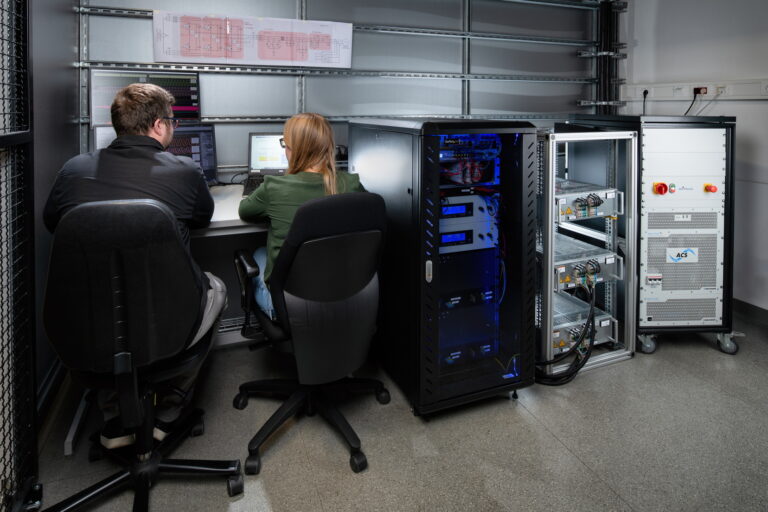
Grid-forming converter from the MicroGRID_LAB at the Institute of Networked Energy Systems. The converter is used to generate virtual inertia under laboratory conditions by means of grid-forming control. © DLR
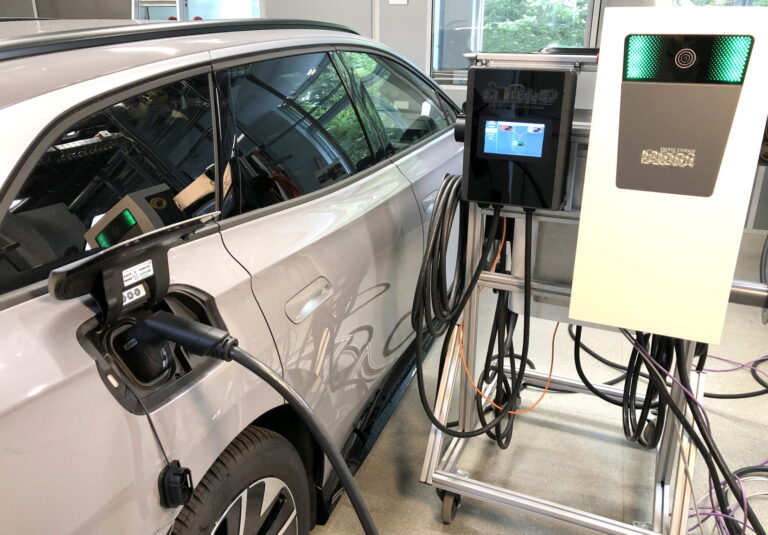
At the interface between mobility, the electricity grid and buildings, researchers at the DLR are analysing the technical options for bidirectional charging. To this end, the laboratory is equipped with a range of components, from electric cars capable of feeding power back into the grid, through various charging technologies, to smart home energy systems. © DLR

How do your microgrid emulation facilities allow you to test the dual fuel HT-PEM fuel cell system under realistic load profiles?

With the Networked Energy Systems Emulation Centre (DLR_NESTEC), the DLR closes the gap between computer generated simulations, which only return results within the programmed parameters, and field tests in the real world, which can sometimes be expensive and dangerous – for people, for the equipment and for grid security. The DLR_NESTEC lab on the other hand, uses emulations to create a protected space, mimicking the behavior of real hardware in a realistically designed environment. This facility allows us to perform tests pushing the limits that we don’t want to push in the field – including short circuits, voltage abnormalities, e.g. brown outs or difficult load behavior such as sudden switching of loads with the RESCUE system while simultaneously measuring efficiencies and evaluating our goals.

Which scenarios do you plan to test under controlled simulated conditions, and how do the findings from your analysis feed back into the field test plan or the system design?

Since the RESCUE project has only a limited timeframe for the field testing with the THW, we want to emulate different THW application scenarios with our DLR_NESTEC facilities first. One of those scenarios is the base of operations camp usually supplied by diesel generators. By using different load profiles from existing camps, we can emulate at different power levels and test the behavior of the RESCUE system. Results of that test can then be used to determine the maximum size of loads that can be connected during field testing. Since the performance of the system is dependent on the size and performance relation between fuel cell, battery and inverter, the test results can also be used to tailor future system designs to specific use cases that can be tested in the laboratory.
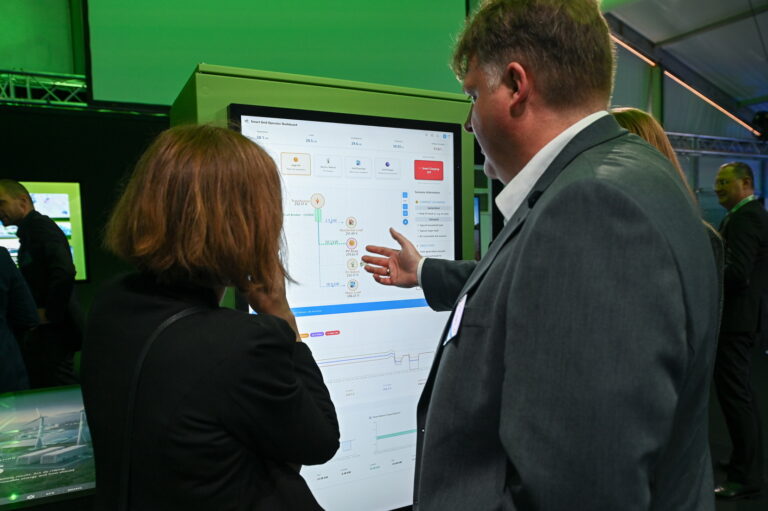
Complex energy system simulations for different scenarios. © DLR

Which factors do you consider critical for the system to demonstrate reliable operation, and what requirements must the system fulfill for the field test to be successful?

Disaster relief work is a very harsh environment with diverse load requirements. A load profile of a base of operations camp for example looks different compared to an application where the system is used to pump water in a flooding event. Therefore safe, easy to use and stable operation is a key aspect that has to pass laboratory and field testing. In contrast, the efficiency performance of the system, while being an important metric in the success of the project, is not that important for the tests in the field.
Consortium
Funding
Project RESCUE with Grant Agreement number 101192169. Supported by Clean Hydrogen Partnership and its members. Co-funded by the European Union.
Please Note
Views and opinions expressed are however those of the author(s) only and do not necessarily reflect those of the European Union or the Clean Hydrogen Partnership. Neither the European Union nor the granting authority can be held responsible for them.

This website uses only technically necessary cookies to ensure its proper functioning. No analytics or advertising cookies are used.

You can find more information in our Privacy Policy.